
How Long Does Running Physical Therapy Take to Work in Rhinelander?
If you are an active runner or performance athlete, an injury can be incredibly frustrating. You want to get back on the trails around Rhinelander, finish your next race, or simply move without pain. One of the most common questions we hear at Motivation Health & Wellness is: "How long will running physical therapy take to work?"
There is no single answer that fits every person. However, understanding the factors that shape your recovery, the objective testing tools we use, and how a personalized approach makes a difference can help you set realistic expectations and stay motivated throughout the process.
Factors That Influence Your Recovery Timeline
Your physical therapy timeline is highly individualized. Several key variables determine how quickly you progress.
Severity and type of injury play a significant role. A mild muscle strain may resolve in a few weeks, while a chronic condition like Achilles tendinopathy or a significant ligament sprain can require several months. Acute injuries often respond faster than chronic ones, where compensatory movement patterns have developed over time. At Motivation Health & Wellness, every plan begins with a thorough evaluation to assess the full extent of your injury.
Consistency and adherence are equally important. Physical therapy is not limited to what happens during your sessions. Performing your prescribed exercises and managing your activity levels between visits directly affects how quickly you heal. Skipping exercises or returning to high-impact activity too soon can prolong recovery significantly.
Your baseline fitness and lifestyle also influence healing capacity. Runners with a strong foundation of strength, good sleep habits, and sound nutrition tend to recover more efficiently. These factors are considered when building your running physical therapy plan.
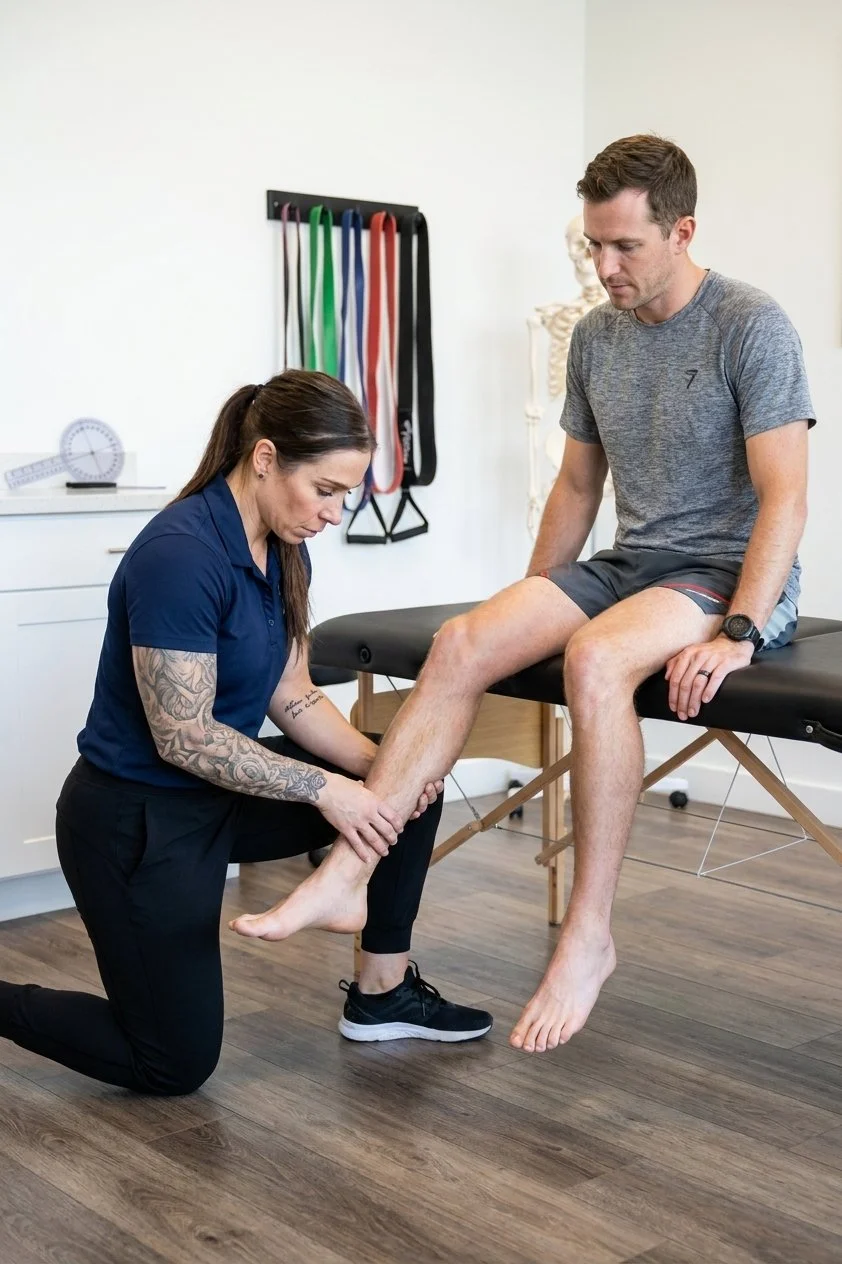
The Role of Objective Testing
At Motivation Health & Wellness, we rely on data-driven decision-making rather than guesswork. Objective testing gives us precise, measurable insight into your body's capabilities and progress.
Running Gait Analysis and Running Form Assessment use slow-motion video to analyze every phase of your stride. This allows us to identify biomechanical inefficiencies, such as improper foot strike or hip drop, that may be contributing to your pain. Targeted corrections to your form reduce stress on vulnerable tissues and lower your risk of re-injury.
VALD Testing and Force Plate Testing measure ground reaction forces, quantifying your strength, power output, and side-to-side asymmetry. These tools help us identify subtle differences in leg drive or landing stability that are often invisible to the naked eye. By tracking these metrics over time, we can confirm you are genuinely stronger before clearing you for a return to full activity.
Return-to-Sport Testing and Functional Movement Assessment round out our evaluation process, ensuring that your transition back to running is based on objective benchmarks rather than assumptions.
Common Running Injuries and General Recovery Timelines
While every runner's recovery is unique, the following general timelines apply to some of the most common conditions we treat:
Runner's Knee (Patellofemoral Pain): Initial relief is often felt within 2 to 4 weeks, with a full return to running typically within 4 to 8 weeks.
Achilles Tendinopathy: Early improvement may take 4 to 6 weeks, with full resolution often spanning 8 to 12 or more weeks.
Plantar Fasciitis: Significant pain reduction is common within 4 to 6 weeks, with full recovery taking 6 to 12 weeks.
Shin Splints: With targeted strengthening of the calf and lower leg musculature, recovery typically occurs within 4 to 8 weeks.
IT Band Syndrome: Depending on severity, runners often see meaningful improvement within 6 to 10 weeks with consistent treatment.
Hamstring Strain: Mild strains may resolve in 3 to 6 weeks, while more significant injuries can require 8 to 12 weeks of structured rehabilitation.
These are general averages. Your specific timeline depends on the nature of your injury, your commitment to the program, and how your body responds to treatment.
Why One-on-One Physical Therapy Produces Better Results
At Motivation Health & Wellness, our model is built around dedicated, one-on-one care. Your therapist's full attention is on you for the entire session, not divided across multiple patients.
This focused environment allows more time for manual therapy, precise exercise coaching, and thorough education about your condition. Treatments such as dry needling, myofascial release, soft tissue mobilization, and joint mobilization can be applied with greater intention and adjusted in real time based on your response.
As you progress, your program evolves. We move seamlessly from acute pain management into therapeutic exercise, neuromuscular re-education, andplyometrics and return-to-sport progressions when the time is right. This continuity of care is a meaningful advantage for performance athletes in Rhinelander who want to return to running stronger than before.
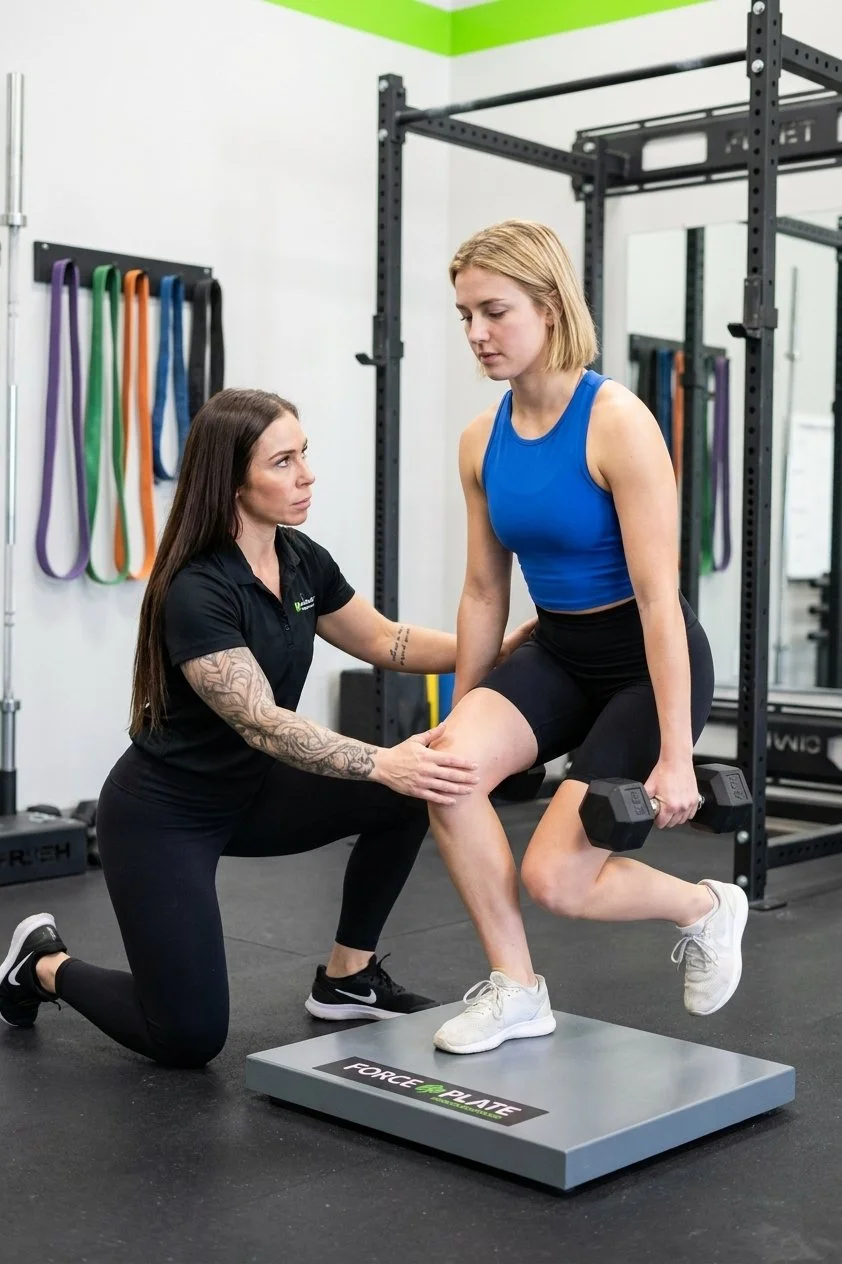
Accelerating Recovery with Targeted Modalities
Recovery does not stop when your session ends. Motivation Health & Wellness integrates a range of evidence-informed treatment modalities to support healing between visits and reduce the overall length of your recovery.
Depending on your needs, your plan may incorporate:
Blood Flow Restriction (BFR) training to build strength with lower mechanical load on healing tissues
Electrical stimulation (TENS/NMES) to manage pain and support muscle activation
Compression therapy to enhance circulation and reduce swelling
Cold therapy and heat therapy applied strategically to manage inflammation and promote tissue recovery
Cupping, IASTM/Graston, and scraping to address soft tissue restrictions
Taping (KT / athletic taping) to support joints and improve movement confidence during activity
Each modality is selected based on your specific injury, stage of recovery, and performance goals, not applied as a one-size-fits-all protocol.
From Rehabilitation to Performance: The Next Step
Healing the injury is only part of the goal. Returning to running at the level you want requires a deliberate bridge between rehabilitation and full performance.
At Motivation Health & Wellness, Sports Performance Trainingand Strength & Conditioning services provide that bridge. Once you have cleared the clinical benchmarks established through return-to-sport testing, structured performance training helps you rebuild power, endurance, and resilience. This phase focuses on progressive overload and sport-specific movement patterns, giving you the physical foundation to run with confidence and reduce the likelihood of future injury.
For runners focused on long-term health and performance, injury prevention and prehabilitation programming are also available to address vulnerabilities before they become problems.
Getting Back to Running in Rhinelander
Understanding your recovery timeline reduces uncertainty and helps you stay committed to the process. At Motivation Health & Wellness, our running physical therapy in Rhinelander, WI combines objective testing, one-on-one care, and targeted treatment to get you back on the road or trail as efficiently as possible.
If you are dealing with a running injury or want to address a nagging issue before it sidelines you, reach out to Motivation Health & Wellness to schedule a consultation and start building your personalized path back to peak performance.
